

AI & Workflow Automation
AI & Workflow Automation empowers companies to automate operational processes, from task distribution to document and data flow between different systems. By implementing workflow automation solutions, companies can ensure that documents, tasks and data move automatically between systems, reducing manual work and increasing operational efficiency.
What Is Workflow Automation?
Workflow automation is the automation of an organisation’s work processes, where tasks, information, and documents move automatically between different people or systems according to predefined rules.
Typical workflow automation processes include document approvals, customer inquiry processing, task distribution and automatic data transfer between systems. By implementing workflow automation solutions, organisations can standardise operations and reduce manual administrative work.
Business workflow automation is often one of the key components of an organisation’s hyperautomation system, as it connects people, systems, and data into a single functioning process structure.
Where Workflow
Automation Fits
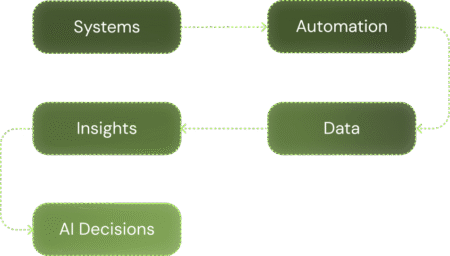
Workflow automation is one of the main layers of hyperautomation. It defines how tasks, documents, and data move between different systems and teams within an organisation. However, the greatest value comes when business workflow automation interacts with other automation components. Custom Business Applications provide individual systems where operations take place, Automation & Reporting ensures automated data collection and process monitoring, and Power BI & Management Intelligence allows to see results in real time and make decisions. When these elements are combined, the result is a complete automation solutions system where processes run consistently, information flows automatically, and operations become easier to manage and more efficient.

Power Automate

Power Apps

Power BI

How We Implement
Workflow Automation Services
1. Process Analysis
First, we analyse existing processes and workflow sequences. We then identify which steps require significant manual input and which could be optimised using workflow automation solutions.
2. Systems Integration
We combine different business systems (CRM, ERP, financial, or other platforms) so that data can move automatically between them.
3. Workflow Automation
We create automated workflow processes to manage tasks, documents, and data transfer between systems.
4. Testing & Optimisation
Automated processes are tested in real-life situations to ensure stable operation. If necessary, business workflow automation solutions are further optimised and adapted to the needs of the organisation.
When AI Workflow Automation Becomes Necessary
-
Too much manual work. Teams spend a lot of time on repetitive tasks.
-
Information is scattered across multiple systems. Data must be manually transferred between CRM, finance, project management, or other platforms.
-
Slow document and approval processes. Contracts, proposals, or internal approvals are handled via email instead of AI document automation.
-
Difficult to see the progress of processes. Managers are unclear about where the workflow stops, where delays occur, or who is responsible for the next step.
-
Frequent operational errors. Manual data transfer increases the risk of human errors.
-
Tasks are not distributed automatically. Without AI workflow automation, tasks cannot be automatically prioritized or assigned to the responsible people.
Workflows That Can Be Automated
Customer inquiry routing
Internal approval processes
Proposal generation
Invoice generation
Payment verification
Document workflow automation
Employee onboarding workflow
Task assignment automation
CRM data synchronisation
Document data extraction
Report generation automation
Order processing AI automation workflow
Ready to Automate
Your Workflows?
Automation & Data Audit will help you understand how your current workflows operate and where workflow automation solutions could create the most value for your organisation.
Have questions about automating your workflows or want to discuss your situation first? Contact us before booking an audit.
FAQ
Workflow automation is the use of technology to automate business processes, where tasks, documents, and information move between systems or employees automatically according to predefined rules.
In practice, enterprise workflow automation can include document approvals, customer inquiry processing, task distribution, or data transfer between CRM, financial, and other systems.
Workflow automation services usually start with an analysis of existing processes. First, repetitive actions, manual data transfer, or document processing that slow down operations are identified. Next, organisations typically use workflow automation tools to connect different systems and create automated workflow sequences.
There are many different workflow automation tools on the market, but the most suitable choice usually depends on the complexity of the systems and processes used by the organisation.
For example, our clients’ workflow automation solutions are usually created using the Microsoft Power Platform ecosystem – Power Automate, Power Apps, and Power BI. Power Automate allows you to create automated processes between different systems, Power Apps is used to create internal business applications, and Power BI helps you monitor process results and KPIs in real time.
Intelligent automation is a more advanced automation model that combines workflow automation with artificial intelligence technologies. While traditional workflow automation follows predefined rules, intelligent workflow automation can analyse data, prioritise tasks or make decisions automatically.
For example, using AI document automation, the system can automatically scan documents, extract information from invoices or contracts, and route them to the appropriate workflow stage.
Many everyday business processes can be automated using workflow automation. These can include document approvals, customer inquiry management, invoice processing, or employee onboarding processes. Document-based processes are particularly well suited to document workflow automation, where contracts, proposals, or reports are automatically transferred between departments. In such cases, document workflow automation software is used to automate document management. In addition, business workflow automation can be used to automate CRM processes, sales activities, task coordination, or reporting.
Yes, one of the most important features of workflow automation solutions is that there is no need to change the tools currently in use; it is enough to combine them into a single system. With digital workflow automation, data can move automatically between different platforms, eliminating the need for manual information transfer.
Artificial intelligence provides additional opportunities for workflow automation. While traditional automation follows predefined rules, AI workflow automation allows you to analyse data and automate more complex processes. For example, AI document automation can automatically extract information from documents, classify files, and route them to the appropriate workflow processes.
Workflow automation services usually begin with an analysis of an organisation’s processes. Specialists evaluate existing workflows and systems and determine where automation can create the most value. The next step is workflow automation to reduce manual, administrative work that does not require daily employee involvement.
Enterprise workflow automation refers to the automation of complex processes in large organisations. In such projects, workflow processes span multiple systems, departments and data sources. Enterprise workflow automation software is often used to manage processes between CRM, ERP, financial or operational systems.